Sewer Vapour Testing to Take Place in Areas of the Goulds

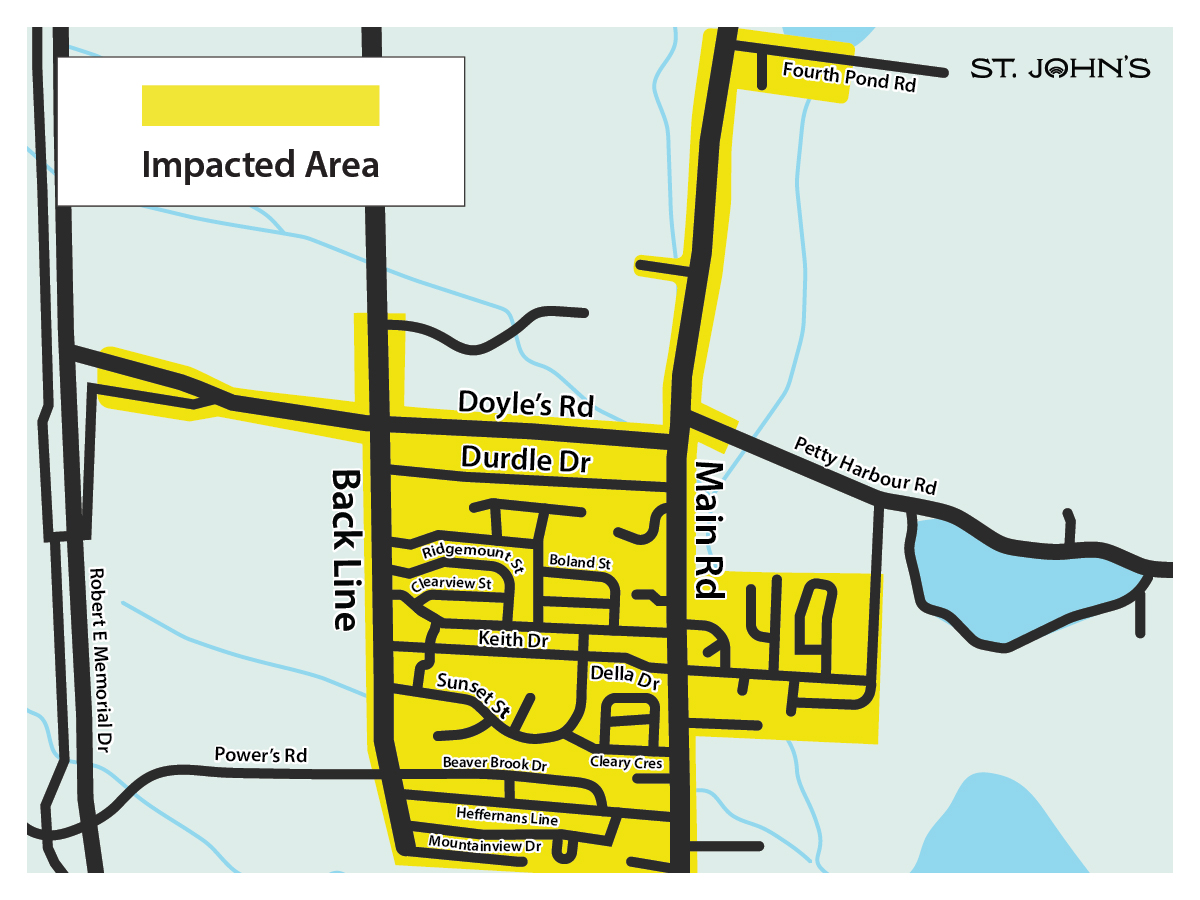
The City of St. John’s will be testing sewer pipes in areas of the Goulds from November 23 to 28, 2026, 8:30 a.m. to 4 p.m.

The testing will help identify possible defects, improper connections or other places where unwanted water may be entering the sewer system.

To conduct the test, crews will place a large fan over a sewer manhole and introduce a harmless, artificially produced vapour into the system. The vapour looks like smoke and may be visible coming from manholes and plumbing vents on rooftops.

How Residents Should Prepare

The most important thing residents can do is ensure that all plumbing drain traps contain water. Water in these traps creates a barrier that helps prevent testing vapour and normal sewer gases from entering your home. 

Before testing starts on November 23, please: 
  • Flush all toilets.
  • Run water in all sinks, bathtubs and showers.
  • Pour water into basement and other floor drains.
  • Run water in infrequently used fixtures, including spare bathrooms and utility sinks. 

These steps only need to be completed once before testing begins. There is no need to repeat them daily. Residents do not need to be home during testing, and crews will not need to enter your home.

If you notice vapour inside your home, move to fresh air and contact Access St. John’s by calling 311 or 709-754-CITY (2489). This may indicate a plumbing issue.

If you are unsure whether what you see is smoke from a fire or vapour from the testing, leave the building and call 911.

Learn More

For more information, including a list of all impacted streets, review the frequently asked questions below.

The City thanks residents for their cooperation and understanding as this important work is completed in their neighbourhoods. 

Frequently Asked Questions

Vapour testing involves introducing a harmless, artificially produced vapour into the sanitary sewer system using a large fan placed over a sanitary sewer manhole. Crews observe where the vapour exits to help identify potential defects, openings or improper connections. 


The purpose of testing is to identify possible locations where unwanted rainwater or groundwater may be entering the sanitary sewer system. This can include damaged pipes, improper connections or other openings. The results help the City identify areas that may require further investigation, maintenance or repairs. 

The following streets will be impacted by the vapour testing (*indicates streets that are not being tested on directly, but may experience residual vapour): 

  1. Riverside Dr W  

  1. Hennessey's Line, between Meadowbrook Dr and Riverside Dr W 

  1. Eden St  

  1. Meadowbrook Dr  

  1. *Kieley Dr 

  1. *Everard Ave 

  1. Gary Dr 

  1. *Bonnie Dr 

  1. Meadowbrook Park Rd 

  1. Walsh Pl  

  1. Keith Drive  

  1. Boland St  

  1. North Dr 

  1. Gullage St  

  1. Clearview St 

  1. Ridgemount St 

  1. *Spruce Grove Ave 

  1. *Lotus St 

  1. Mountain View Dr 

  1. *Heffernan's Line 

  1. *Beaver Brook Dr 

  1. *Ryan's River Rd 

  1. Cleary Dr 

  1. Soper Cres 

  1. Martin St 

  1. Sunset St 

  1. McConnell Pl 

  1. Hannaford Pl 

  1. Della Dr, Between Civic 48 and Back Line 

  1. Fourth Pond Rd  

  1. Chelsey Dr 

  1. Cox's Ln 

  1. *Bishop's Line 

  1. *McGrath Pl W 

  1. *Fleming's Rd 

  1. Main Rd, between civic 250 and 327 

  1. Main Rd, between civic 500 and 562 

  1. *Back line, between Durdle Dr and Ryan's River Rd 

No. The testing vapour is harmless to people, pets and plants, and will not stain walls, furniture, drapes or clothing. However, like other vapours, it may cause temporary irritation or coughing, particularly for individuals with existing respiratory sensitivities. 

You can review the Product Safety Information sheet if you would like to know more about the Vapour. 

The most important thing residents can do is ensure that all plumbing drain traps contain water. Water in these traps creates a barrier that helps prevent testing vapour and normal sewer gases from entering your home. 

Before testing starts on November 23, please: 

  • Flush all toilets. 

  • Run water in all sinks, bathtubs and showers. 

  • Pour water into basement and other floor drains. 

  • Run water in infrequently used fixtures, including spare bathrooms and utility sinks. 

These steps only need to be completed once before testing begins. There is no need to repeat them daily. You do not need to be home during testing, and crews will not need to enter your home. 

You may see harmless vapour coming from sanitary sewer manholes and plumbing vent stacks on rooftops. This is normal and expected during testing. 

Vapour coming from the ground, a yard or another unexpected location may indicate a possible defect or opening that requires further investigation. 

If you have questions during testing Access St. John’s is available to residents 24 hours a day, seven days a week by email at access@stjohns.ca, by phone at 311 or 754-CITY (2489) or by submitting a request online at StJohns.ca/Access.

You may continue using your toilets, sinks, showers and other plumbing fixtures normally. Your sewer service is not expected to be interrupted. 

City crews may be working in your neighbourhood for a few hours. Each test setup takes approximately 30 minutes, and most homes will only be within the test area for one or two tests. 

Under normal circumstances, testing vapour should not enter your home if your plumbing is properly installed and maintained and all drain traps contain water. 

If vapour enters your home, it may indicate an issue with your plumbing system. While the vapour is not toxic, this may indicate that other sewer gases could be entering your home. 

Move to fresh air immediately and open windows and doors for ventilation, if safe to do so. If you are unsure whether what you see is smoke from a fire or vapour from the testing, leave the building and call 911. 

You should then contact Access St. John’s by calling 311 or 709-754-CITY (2489).  

Yes. If vapour enters your home, it may activate your smoke alarm. Do not disable or disconnect your smoke alarms during testing. If you see smoke or vapour and are unsure of its source, leave the building and call 911. 

Vapour coming from an unexpected location, such as the ground or your yard, may indicate a possible opening or defect in the sanitary sewer system. 

This does not necessarily mean an immediate repair is required. Please notify the testing crew or contact the City so the location can be documented and assessed. 

Subscribe Back to News Search

Contact Us

City Hall
10 New Gower Street, St. John's, NL
P.O. Box 908, St. John's, A1C 5M2
Phone: 311 or 754-CITY (2489)
Email: access@stjohns.ca

Stay in Touch

Sign up to receive information from the City of St. John's directly to your inbox. Check out the various categories of general news, and emergency notifications.